

Gansons Difussion Blenders
Gansons diffusion blenders provide gentle, shear-free blending of pharmaceutical powders, granules, and dry ingredients – from 1L R&D vessels to 16,000L production blenders. Four geometries are available: the V blender, the double cone blender, the IBC bin blender, and the octagonal blender – each designed for specific powder characteristics, batch sizes, and operational requirements. All Gansons diffusion blenders are manufactured to cGMP standards for pharmaceutical, food, chemical, nutraceutical, and personal care applications. Vessel geometries are optimised to deliver homogeneous blending of powders with widely varying flow properties, bulk densities, and particle size distributions – including materials that tend to segregate or form shear planes during mixing. Over 3,000 Gansons blenders are in active use globally.
The Principle of Diffusion Blending
Diffusion blending, also called tumble blending, achieves powder homogeneity through the gentle, three-dimensional movement of the blender vessel itself rather than through rotating impellers or mechanical agitators. As the vessel rotates, gravity repeatedly redistributes the powder bed, causing particles to cascade, roll, and diffuse across each other’s surfaces. The absence of mechanical agitators means there is no imposed shear on the product.
This makes diffusion blending the method of choice wherever product integrity, content uniformity, and contained processing are the primary requirements:
- Free-flowing and cohesive pharmaceutical powders where active ingredient uniformity is critical to dose accuracy
- Fragile granules where impeller-based mixing would cause attrition, fines generation, or particle breakage
- Multi-component blends containing materials of differing bulk density or particle size, where high-shear mixing would cause de-mixing rather than blending
- Highly potent active pharmaceutical ingredients (HPAPI) and high-OEB compounds, where contained, closed-vessel blending is required to protect operators
- Moisture-sensitive products where wet granulation must be avoided
Blend time and rotation speed are the primary process parameters — both are validated against blend uniformity data (RSD target typically ≤ 2.0% for content uniformity-critical blends) during IQ/OQ qualification.
Blender Types
Gansons diffusion blenders are available in four geometries, covering the full range from R&D scale to the largest commercial production batches:
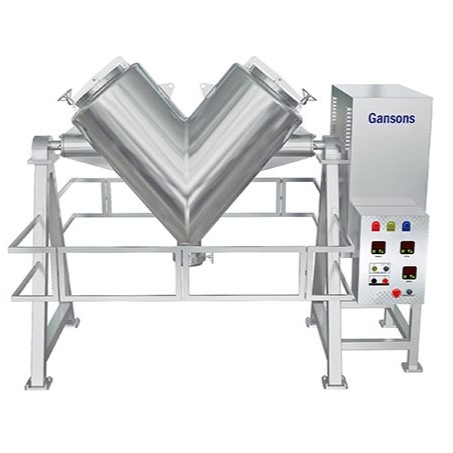
V Blender (Twin Shell Blender)
Capacity: 1L to 5,000L
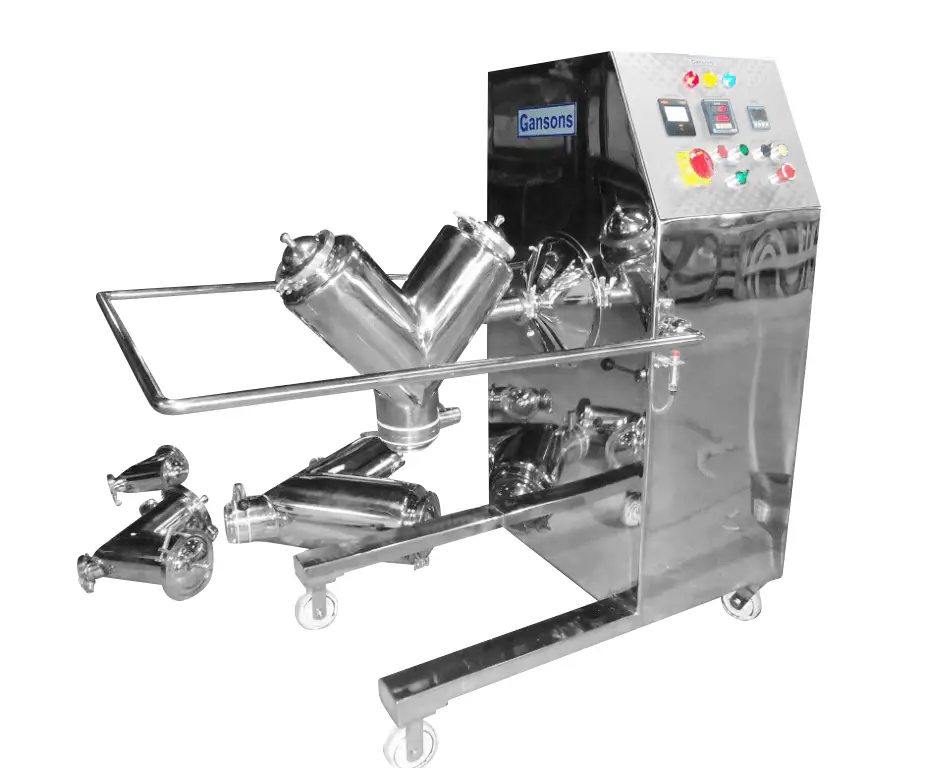
The V blender consists of two cylindrical shells joined at an angle, forming a distinctive V-shaped vessel. As the vessel rotates on its horizontal axis, the powder mass is repeatedly split into the two arms of the V at the top of rotation, then converges back into the stem at the bottom. This continuous split-and-recombine action is highly effective for blending free-flowing powders with similar bulk densities and particle sizes, producing uniform blends within short cycle times.
The V blender is the most widely used diffusion blender geometry in pharmaceutical powder blending, particularly for the final blend step in oral solid dosage (OSD) manufacturing prior to tablet compression or capsule filling. The geometry has no internal dead zones, allowing complete product discharge and straightforward cleaning validation.
Typical applications:
- Final blend for tablet and capsule manufacture
- Nutritional supplement and nutraceutical blending
- Chemical and food ingredient blending
- API and excipient homogenisation at commercial scale
Double Cone Blender
Capacity: 1L to 5,000L
The double cone blender consists of two conical sections joined at a central cylinder, mounted on a horizontal rotation axis. The tapered geometry encourages powder to flow continuously towards the centre of the vessel and back, producing a gentle rolling and converging mixing action with low mechanical stress on the product. The symmetric internal profile minimises residual product hold-up and simplifies cleaning validation.
The double cone blender is particularly suited to cohesive powders and granules that require more support from vessel geometry than free-flowing materials need, and for products with wide distributions of particle size or bulk density where progressive blending produces better uniformity than faster-acting mechanisms. The symmetric geometry transfers scale-up parameters predictably from development to production scale.
Typical applications:
- Pharmaceutical granule blending and cohesive powder homogenisation
- API and excipient blending at commercial scale
- Food ingredient mixing and nutraceutical blending
- Chemical powder blending where gentle action is required
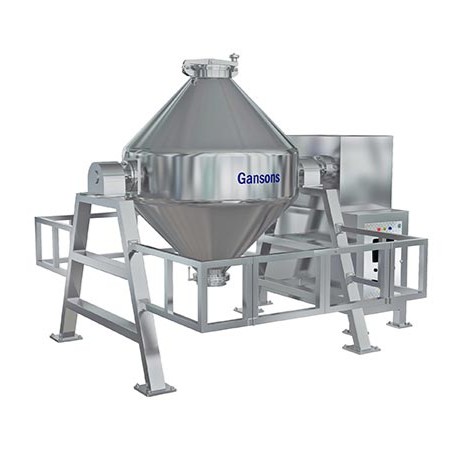
Double Cone Blender
Capacity: 1L to 5,000L
The double cone blender consists of two conical sections joined at a central cylinder, mounted on a horizontal rotation axis. The tapered geometry encourages powder to flow continuously towards the centre of the vessel and back, producing a gentle rolling and converging mixing action with low mechanical stress on the product. The symmetric internal profile minimises residual product hold-up and simplifies cleaning validation.
The double cone blender is particularly suited to cohesive powders and granules that require more support from vessel geometry than free-flowing materials need, and for products with wide distributions of particle size or bulk density where progressive blending produces better uniformity than faster-acting mechanisms. The symmetric geometry transfers scale-up parameters predictably from development to production scale.
Typical applications:
- Pharmaceutical granule blending and cohesive powder homogenisation
- API and excipient blending at commercial scale
- Food ingredient mixing and nutraceutical blending
- Chemical powder blending where gentle action is required
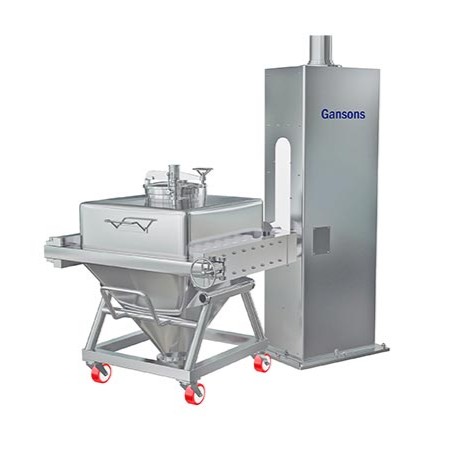
IBC Bin Blender
Capacity: 1L to 3,000L
The IBC bin blender is the most versatile diffusion blender in the Gansons range. Rather than transferring powder into a dedicated blending vessel, the IBC container itself — the same vessel used to store and transport the powder through the manufacturing line — is mounted directly onto the drive station and rotated to blend. This eliminates multiple powder transfer steps, significantly reducing cross-contamination risk, operator exposure, and product loss between process stages.
Upstream and downstream integration
IBC bins used on the Gansons bin blender move seamlessly through the entire manufacturing train — from granulator discharge through the blender drive station to tablet press or capsule filler feed — without manual powder transfer at any stage. Discharge valve options (butterfly valve, iris valve, cone valve) are matched to downstream equipment requirements.
HPAPI and high-OEB containment
For manufacturers processing highly potent active pharmaceutical ingredients (HPAPI) at OEB 4 and OEB 5, Gansons IBC bin blenders are available in fully contained configurations achieving containment performance below 1 µg/m³ — meeting the most demanding operator protection requirements without dedicated isolator infrastructure. Options include sealed IBC interfaces, contained charging and discharge systems, glove ports, and continuous liner technology.
Portability
Gansons IBC bins are mounted on integrated wheel systems for manual movement within the facility, and on motorised or hydraulic lifters for raising the bin to the drive station. A single drive station can serve multiple IBC bins in sequence — maximising equipment utilisation in multi-product environments. Multiple bin sizes are interchangeable on the same drive station.
Applications
- Contained pharmaceutical powder blending, HPAPI and OEB 4/5 product processing
- Multi-product cGMP manufacturing and continuous manufacturing integration
- Pharmaceutical final blend with direct IBC discharge to tablet press or capsule filler
- Nutraceutical, food and chemical powder blending
Octagonal Blender
Capacity: 1L to 16,000L
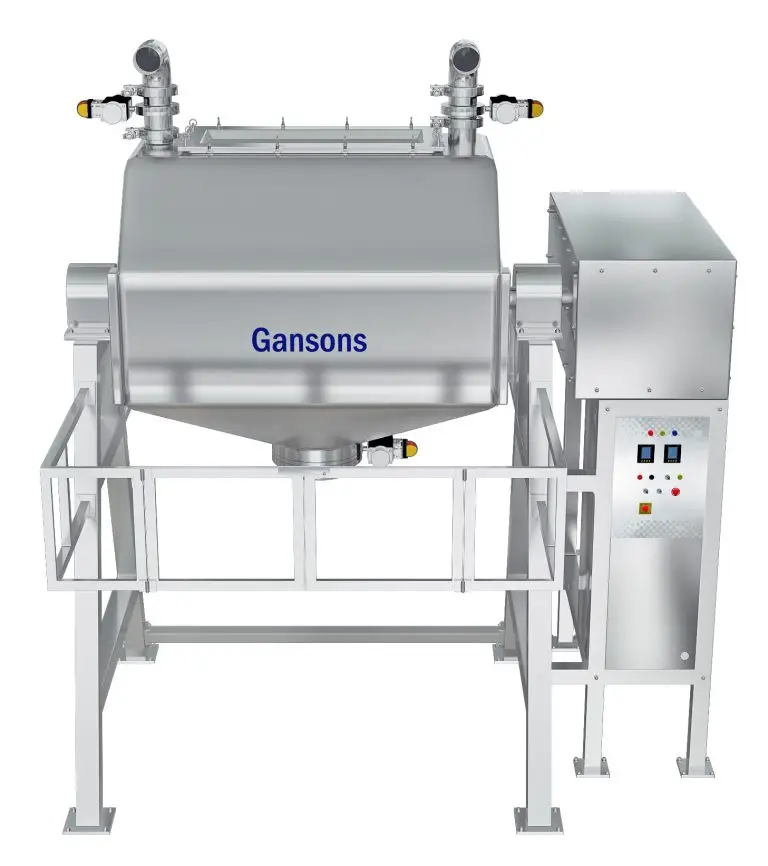
The octagonal blender is the highest-capacity diffusion blender in the Gansons range and the geometry of choice for the largest pharmaceutical batch sizes in commercial production. The eight-sided geometry creates a more complex powder movement pattern than cone or V geometries — multiple faces redirect powder flow at different angles on each rotation, producing effective mixing of large powder masses, including cohesive powders and multi-component blends with density variations, within commercially viable cycle times.
With a capacity range extending to 16,000L, the Gansons octagonal blender is the largest-scale diffusion blending option available, widely used in the production of high-volume generic pharmaceuticals where batch sizes of several hundred kilograms to several tonnes are standard.
Typical applications:
- High-volume pharmaceutical powder blending and large-batch OSD production
- Commercial-scale generic pharmaceutical manufacturing
- Chemical and industrial powder blending at production scale
- Nutraceutical and food ingredient blending in large formats
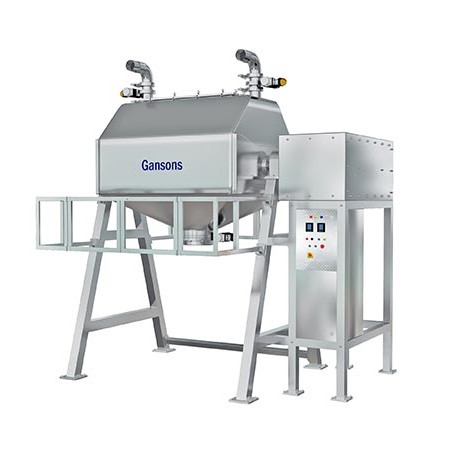
Octagonal Blender
Capacity: 1L to 16,000L
The octagonal blender is the highest-capacity diffusion blender in the Gansons range and the geometry of choice for the largest pharmaceutical batch sizes in commercial production. The eight-sided geometry creates a more complex powder movement pattern than cone or V geometries — multiple faces redirect powder flow at different angles on each rotation, producing effective mixing of large powder masses, including cohesive powders and multi-component blends with density variations, within commercially viable cycle times.
With a capacity range extending to 16,000L, the Gansons octagonal blender is the largest-scale diffusion blending option available, widely used in the production of high-volume generic pharmaceuticals where batch sizes of several hundred kilograms to several tonnes are standard.
Typical applications:
- High-volume pharmaceutical powder blending and large-batch OSD production
- Commercial-scale generic pharmaceutical manufacturing
- Chemical and industrial powder blending at production scale
- Nutraceutical and food ingredient blending in large formats
Engineering & Quality - Why Gansons Blenders Last
Surface Finish and Vessel Construction
All product-contact surfaces are manufactured from 316L stainless steel with a mirror-polished internal finish (Ra ≤ 0.4 µm as standard, finer finishes available on request). Welds are fully crevice-free, continuous, ground flush to the vessel interior, and individually inspected. This specification eliminates powder hold-up in surface irregularities, supports cleaning validation, and prevents the surface pitting and crevice corrosion that develops in lower-grade steel over extended service.
Internal Geometry and Angle Optimisation
The internal angles of every Gansons blender geometry – cone convergence angles, V-shell angles, octagonal face transitions – are specified to allow free flow and complete discharge of powders across the widest possible range of angle of repose. Materials from 20° (free-flowing) to above 55° (cohesive) are accommodated without modification. A geometry optimised only for free-flowing powder will leave cohesive materials stagnant in corners – producing poor blend uniformity and leaving residue that creates cleaning validation failures.
Shear Plane Prevention
Powders of differing bulk density, particle size, or surface energy tend to segregate during tumble mixing by forming shear planes – stable stratified layers that rotate with the vessel rather than mixing across each other. Gansons vessel geometries are specifically designed to disrupt shear plane formation through asymmetric flow patterns that repeatedly reorient the powder bed and break down stratification. This is particularly important for pharmaceutical formulations containing a high-density API dispersed in a lower-density excipient blend.
Drive System and Gearbox Specification
Gansons uses precision-machined gearboxes with hardened gear sets and sealed bearing units specified for the full torque and cycle life of the blender. Gear and bearing specifications are selected to eliminate the progressive wear, backlash development, and gearbox failure that are the most common mechanical failures in commodity blenders. Gearboxes are oil-filled with sight-glass oil level monitors and are designed for routine maintenance without specialist tooling.
Crack Prevention - Vessel and Structural Fabrication
Stress cracking at welds, corners, and structural connections is the most common vessel failure mode in diffusion blenders under heavy production use. Gansons blenders use full-penetration welds at all structural junctions, stress-relief treatment where required, and geometry transitions that avoid abrupt angle changes – the conditions that create stress concentration under cyclic loading. All vessels are hydraulically tested before despatch.
Safety Features
All Gansons diffusion blenders are supplied as standard with a comprehensive integrated safety system:
- Safety railings with interlocks - perimeter guards prevent operator access to the rotating vessel. The blender cannot start if any guard is open; the drive stops immediately if a guard is opened during operation
- IR proximity sensor - infrared sensor with proximity switch monitors the rotation envelope. Drive stops immediately if the exclusion zone is breached during operation
- Emergency stop - clearly marked at operator level on all sides; activates dynamic braking to halt the vessel within one rotation
- Safety interlocks - vessel mounting confirmation, guard position detection, drive fault detection, and over-torque protection
- Double earthing with alarm - continuity monitor raises an alarm if earthing continuity is interrupted, preventing static build-up in pharmaceutical and chemical powder environments
- Over-torque protection - motor current monitoring triggers fault and stop sequence if torque exceeds set limit, protecting against overloading from product bridging or drive abnormality
R&D Interchangeable Blender System
For pharmaceutical formulation development, process scale-up, and multi-product research environments, Gansons supplies a dedicated R&D blender system with interchangeable vessel modules. A single R&D drive station accepts V blender, double cone, and octagonal vessel geometries in the same small-scale capacity range, typically 1L to 50L – allowing formulation scientists to:
- Evaluate multiple blender geometries on the same formulation at laboratory scale before committing to a production geometry
- Establish blend time, rotation speed, and fill-level parameters for each geometry in direct comparison under controlled conditions
- Generate scale-up data on the same equipment platform used at production scale – enabling more accurate transfer of process parameters to commercial blenders of the same geometry
- Support multi-product development programmes without investing in separate laboratory blenders for each geometry
The R&D interchangeable system uses the same vessel construction standards, 316L stainless steel specification, and surface finish as production-scale blenders – ensuring that data generated at laboratory scale accurately represents the behaviour of production equipment. Vessels are supplied with sample ports for blend uniformity sampling at defined positions and time points.
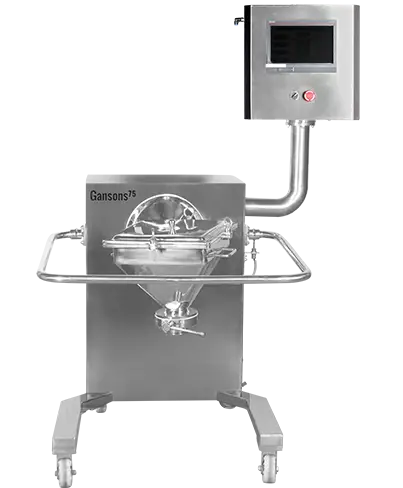
R&D Interchangeable Blender System
For pharmaceutical formulation development, process scale-up, and multi-product research environments, Gansons supplies a dedicated R&D blender system with interchangeable vessel modules. A single R&D drive station accepts V blender, double cone, and octagonal vessel geometries in the same small-scale capacity range, typically 1L to 50L – allowing formulation scientists to:
- Evaluate multiple blender geometries on the same formulation at laboratory scale before committing to a production geometry
- Establish blend time, rotation speed, and fill-level parameters for each geometry in direct comparison under controlled conditions
- Generate scale-up data on the same equipment platform used at production scale – enabling more accurate transfer of process parameters to commercial blenders of the same geometry
- Support multi-product development programmes without investing in separate laboratory blenders for each geometry
The R&D interchangeable system uses the same vessel construction standards, 316L stainless steel specification, and surface finish as production-scale blenders – ensuring that data generated at laboratory scale accurately represents the behaviour of production equipment. Vessels are supplied with sample ports for blend uniformity sampling at defined positions and time points.
Automation and Control
Gansons equipment is available with an integrated intelligent automation platform. Key features include:
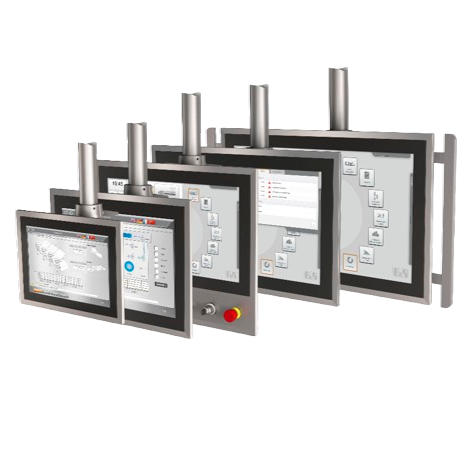
- PLC/SCADA-based control with touch-screen HMI
- Centralised recipe management with role-based access control
- IoT enabled for remote monitoring and pre-emptive analytics
- Integrable with any site architecture including MES, ERP, and LIMS
- Customised reporting and smart graphs for lot reproducibility
- Industry-leading IPC processors for fast, reliable control performance
- 21 CFR Part 11 compliant automation available as an add-on for regulated pharmaceutical facilities
- GAMP 5-aligned computerised system validation documentation supplied with 21 CFR Part 11 configurations
Applications by Industry
Industry
Typical applications
Pharmaceutical
Final blend for tablets and capsules, HPAPI blending, API + excipient homogenisation, contained powder processing
Nutraceuticals
Vitamin and mineral blends, protein powder homogenisation, supplement pre-mixes, botanical blends
Food & Beverage
Spice blends, instant beverage powders, seasoning mixes, dry soup and sauce blends, flour mixes
Chemical
Detergent powder blending, catalyst blending, specialty chemical homogenisation, agrochemical pre-mixes
Personal Care
Talc-based formulations, dry shampoo blends, colour cosmetic powder mixing, bath salts
Capacity Range
Bin Blender
1L to 3,000L
Double Cone Blender
1L to 5,000L
V Blender
1L to 5,000L
Octagonal Blender
1L to 16,000L
Compliance and Certifications






Frequently asked questions
What is a diffusion blender and how does it work?
A diffusion blender – also called a tumble blender – achieves powder mixing by rotating the blender vessel itself, causing the powder bed to repeatedly cascade and redistribute under gravity. Unlike high-shear mixers, there are no internal agitators – resulting in gentle, shear-free blending that preserves particle integrity and produces uniform distribution of all components. Diffusion blenders are the standard technology for the final blend step in oral solid dosage pharmaceutical manufacturing.
What is the difference between a V blender, double cone blender, and octagonal blender?
All three work by tumble rotation but differ in geometry and powder movement pattern. The V blender uses a split-and-recombine action suited to free-flowing powders. The double cone uses a rolling and converging action better suited to cohesive materials and wide particle size distributions. The octagonal blender’s multiple face angles create complex flow patterns effective at the largest batch sizes, up to 16,000L. The IBC bin blender uses the powder’s own storage container as the blending vessel, eliminating transfer steps entirely.
What is the difference between diffusion blending and high-shear mixing?
Diffusion blending relies on gravity-driven particle movement as the vessel rotates – gentle, low-shear, and suited to fragile granules or potent materials. High-shear mixing uses rotating impellers or paddles to actively force powder through the vessel – faster for some applications but generates mechanical stress on particles. For pharmaceutical final blend applications where particle integrity and content uniformity are the primary requirements, diffusion blending is the preferred approach.
What batch sizes are available for Gansons diffusion blenders?
Gansons diffusion blenders cover 1L (R&D scale) to 16,000L (large-scale production). Per geometry: V blender 1L–5,000L, double cone blender 1L–5,000L, IBC bin blender 1L–3,000L, octagonal blender 1L–16,000L.
Can Gansons diffusion blenders handle highly potent active ingredients (HPAPI)?
Yes. Gansons IBC bin blenders are available in contained configurations for OEB 4 and OEB 5 HPAPI processing, achieving containment below 1 µg/m³. Contained configurations include sealed IBC interfaces, contained charging and discharge systems, and continuous liner technology. Contact our process team to discuss specific containment requirements.
How long does a typical pharmaceutical blending cycle take?
Blend time depends on blender geometry, fill level, rotation speed, and powder properties. Typical pharmaceutical final blend cycles range from 10 to 30 minutes. Blend time is established during process development and IQ/OQ qualification, based on blend uniformity sampling data. RSD target for content uniformity-critical blends is typically ≤ 2.0%.
What is the difference between an IBC bin blender and a conventional bin blender?
An IBC bin blender uses the powder’s own transport and storage container directly as the blending vessel – loaded from the granulator, blended, then transported to the tablet press or capsule filler without opening the container. A conventional bin blender uses a fixed vessel permanently attached to the drive station, requiring manual transfer in and out. The IBC approach eliminates transfer contamination risk and is preferred in contained and multi-product pharmaceutical environments.
Downloads
- Brochure – Gansons Difussion Blenders