

Where Every Standard Is a Starting Point, Not a Target
Gansons has been engineering processing equipment for regulated industries since 1947. Over 85% of our installed base operates in facilities subject to oversight by the US-FDA, UK-MHRA, and the European Medicines Agency – regulators who audit not just what your product does, but how it was designed, built, and documented.
Our quality credentials are not marketing claims. They are the cumulative result of more than 75 years of continuous engagement with the most demanding regulatory environments on earth.

Certifications, Qualifications & Regulatory Compliance
Over 85% of Gansons’ active equipment installations operate in facilities regulated by the US-FDA, UK-MHRA and the European Medicines Agency (EMA). This reflects 75 years of designing, manufacturing and qualifying equipment to the world’s most demanding pharmaceutical standards. Every certification listed below is active, independently audited, and directly relevant to your facility’s qualification obligations.
When Gansons equipment arrives at your site, it arrives with the documentation foundation your quality team needs – reducing your qualification burden and accelerating your time to production.

ISO 9001:2015 - Quality Management System
All four of our manufacturing facilities – totalling over 250,000 square feet – operate under ISO 9001:2015 certified quality management systems. This governs every stage of the equipment lifecycle, from design review and material procurement through fabrication, inspection, and customer support. Our QMS is not a separate administrative function; it is embedded in how our engineers work every day.
cGMP Design - Verified in the World's Most Demanding Facilities
Over 85% of Gansons equipment is installed in cGMP (current Good Manufacturing Practice) facilities subject to regulatory oversight by the US-FDA, UK-MHRA, and EMA. This is not a design aspiration — it is a performance record built across decades of installations in regulated environments. Our engineering teams design against three risk dimensions simultaneously:
- Product risk – Surface finish Ra values, material selection (316L stainless or higher-grade alloys), dead-zone elimination, and cleanability – all specified and documented from the design stage, not retrofitted after customer complaint.
- Personnel risk – Ergonomic access for cleaning and maintenance, contained handling for potent and sensitising compounds, and guarding designed to meet Machinery Directive requirements.
- Data integrity risk – Control architecture designed from inception for regulatory audit, not adapted post-delivery.

UK-MHRA - Good Manufacturing Practice (UK GMP)
Gansons equipment is designed, documented and validated to satisfy UK GMP requirements as administered by the MHRA. This includes hardware designed for cleanability and contamination prevention, software validated in accordance with GAMP 5, and documentation packages structured to meet MHRA expectations for equipment qualification in licensed pharmaceutical manufacturing facilities.

21 CFR Part 11 and EU GMP Annex 11 - Data Integrity Architecture
Gansons automation systems are engineered to comply with the data integrity requirements of 21 CFR Part 11 (US-FDA) and EU GMP Annex 11. These regulations govern how electronic records and electronic signatures must be managed in pharmaceutical manufacturing environments – and non-compliance is one of the most common findings in FDA and MHRA inspections.
21 CFR Part 11 compliant Gansons control systems include: immutable electronic audit trails, role-based access controls with individual user accountability, electronic signatures where process steps require them, alarm management logs, and batch record generation – all built into the control architecture as standard deliverables, not optional extras.
Our automation partners are selected for their established track record in Part 11-compliant system delivery, and all software validation activities are conducted and documented in accordance with GAMP 5 guidelines.

US-FDA - 21 CFR Part 11 Electronic Records & Signatures
Gansons automation platforms are designed to meet 21 CFR Part 11 requirements for electronic records and electronic signatures. This includes a Part 11-compliant audit trail with time-stamped, operator-attributed entries; role-based user access controls; data integrity protection; and electronic batch record (EBR) capability. Automation documentation – FRA, SDS, STS is provided as standard for all Gansons SCADA and PLC-based systems. Aligned with ALCOA+ data integrity principles (Attributable, Legible, Contemporaneous, Original, Accurate).

GAMP 5 - Computerised System Validation for Pharmaceutical Equipment
GAMP 5 (Good Automated Manufacturing Practice, 5th edition) is the internationally recognised framework for the validation of computerised systems used in pharmaceutical manufacturing. Published by ISPE and recognised by the FDA, MHRA, and EMA, GAMP 5 defines a risk-based approach to validating automation software and control systems – ensuring that the systems controlling your process are fit for purpose, and that their fitness is documented and auditable.
All Gansons computerised systems – including SCADA interfaces, HMI software, process control modules, and data management layers – are specified, developed, and validated in accordance with GAMP 5 principles. This means your validation team receives a structured package of documentation (User Requirements Specification, Functional Specification, hardware and software design specifications, test protocols, and traceability matrices) that supports your Computerised System Validation (CSV) programme without requiring Gansons’ engineers to be on-site for months.

ASME Boiler and Pressure Vessel Code (BPVC) - Structural Integrity by Design
Pressure vessels, jacketed vessels, process containers, and fluid-handling assemblies manufactured by Gansons are designed and fabricated in accordance with the ASME Boiler and Pressure Vessel Code (BPVC) — the globally recognised benchmark for structural integrity in pressure-containing equipment. ASME BPVC compliance provides your engineering, procurement, and QA teams with independently verified confidence that every pressure-containing component has been designed to a documented code, using materials with traceable certification, and fabricated under a controlled quality programme.
In regulated industries, ASME BPVC compliance removes a significant category of risk from qualification activities. It is a requirement increasingly stipulated by EPC contractors and owner-operators conducting supplier qualification audits.
Where process equipment includes fluid-contact components subject to bioprocessing hygiene requirements — sanitary welds, defined surface finish, cleanability — Gansons designs in accordance with relevant ASME-BPE guidelines covering materials, surface finish, and joinability.
ATEX and IECEx - Hazardous Area Compliance
Pharmaceutical and chemical processes that handle organic solvents, flammable coating solutions, or combustible active pharmaceutical ingredients (APIs) require equipment engineered specifically for hazardous area operation. Gansons equipment is available with ATEX (European Directive 2014/34/EU) and IECEx (IEC international standard) classified configurations, covering both electrical and mechanical ignition risk.
ATEX-rated Gansons equipment is designed for hazardous area compliance from specification – not adapted at commissioning through retrospective guarding. Explosion protection design, zone classification, equipment grouping, and temperature class are addressed during the engineering phase, with documentation supporting your site’s ATEX dossier and DSEAR assessment.
For process engineers and HSE managers specifying equipment for solvent-based granulation, film coating, or extraction processes: ATEX-compliant Gansons configurations are available across our product range.
IECEx - IEC System for Explosion Protection
For customers in India, the Middle East, Southeast Asia, Australia, South Africa and other markets where the IECEx scheme applies, Gansons can supply IECEx-certified equipment. The IECEx scheme provides internationally recognised Ex certification accepted in 50+ countries. IECEx-certified Gansons equipment carries the IECEx mark, Equipment Protection Level (EPL: Ga/Gb/Gc for gas, Da/Db/Dc for dust), and compliant commissioning and maintenance documentation. Particularly relevant for Indian pharmaceutical and chemical manufacturers with international regulatory obligations.
CE Marking - European Machinery Directive Compliance
All Gansons equipment supplied into the European Economic Area carries CE marking in accordance with the Machinery Directive 2006/42/EC. This is supported by a full technical file including formal risk assessment documentation, declarations of conformity, and design verification records. Safety is assessed during the design phase — not resolved through retrospective guarding after equipment is built.

WHO TRS 1019 & PIC/S PI 006 - International Qualification Standards
For customers in markets where WHO guidelines or PIC/S requirements apply — including India (CDSCO), Southeast Asia, Africa and Latin America – Gansons qualification documentation is structured to be compatible with WHO TRS 1019 (Guidance on Good Manufacturing Practices: Validation) and PIC/S PI 006 (Recommendations on Validation Master Plan). These frameworks align with the DQ-IQ-OQ model and are accepted by regulators in over 50 countries.
Containment and OEB Compliance - Protecting Operators, Products, and Environments
With one in four active pharmaceutical ingredients now classified as highly potent, and this proportion continuing to rise, Occupational Exposure Band (OEB) compliance is no longer a specialist requirement – it is a standard procurement filter for pharmaceutical equipment purchasing. Gansons equipment is available with containment configurations engineered to OEB 3, OEB 4, and OEB 5 requirements.
Containment in pharmaceutical manufacturing must protect in three directions: product from operator contamination, operator from product exposure, and environment from both. Gansons addresses containment as a design parameter from project specification – not as a retrofit. This means contained interfaces at product transfer points (the highest-risk moments in any OSD process), cleanability verified and documented for each configuration, and containment performance characterisable by SMEPAC methodology to support your risk assessment and regulatory submission.
For HPAPI processing lines, our process technologists and containment engineers engage with your occupational hygienists at an early stage – because the most cost-effective containment solution is the one designed in from the beginning.
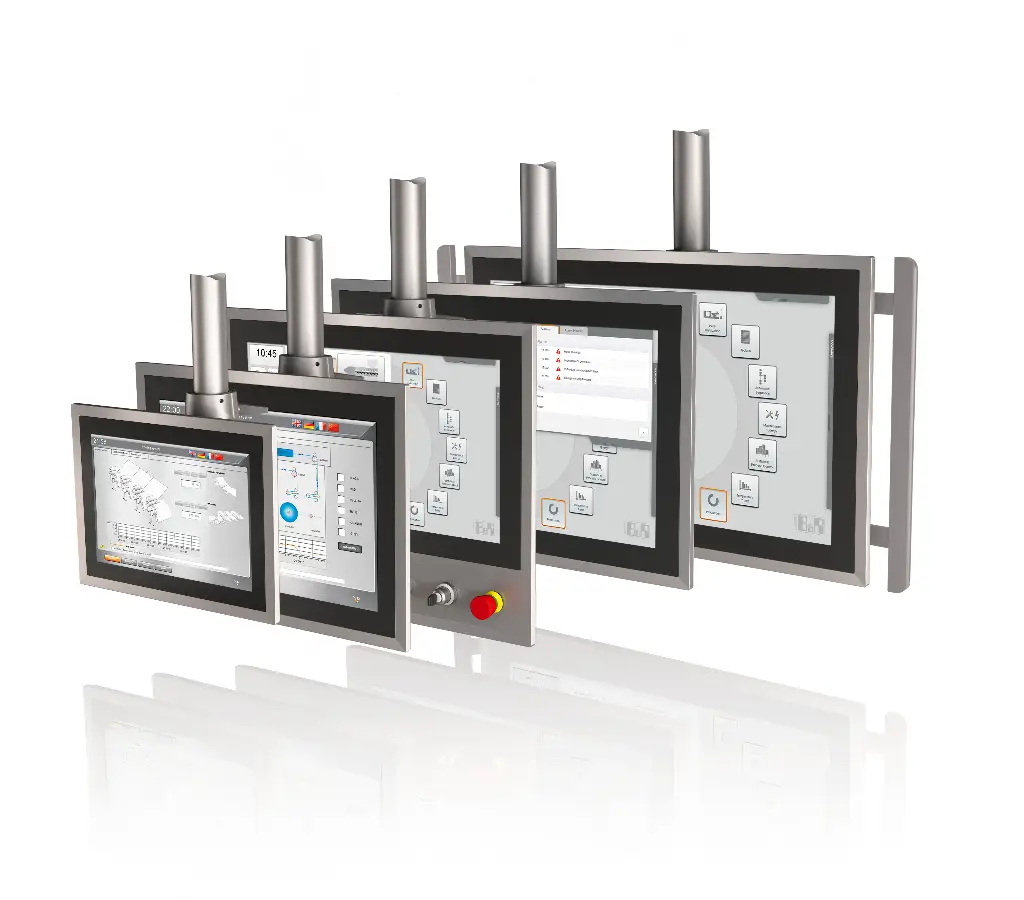
Automation & Pharma 4.0
Gansons is at the forefront of enabling pharmaceutical manufacturers to transition to Pharma 4.0 – the convergence of digital technologies with pharmaceutical processing. Our automation architecture is designed not merely to control equipment, but to generate the process data that drives continuous improvement, regulatory compliance, and manufacturing agility.
Control Architecture Built for Compliance
Gansons automation is not a generic PLC solution with a pharmaceutical label applied. Our control systems are engineered from the specification stage for pharmaceutical compliance – GAMP 5-aligned software validation, 21 CFR Part 11 ready architecture, and operator interfaces designed for GMP-appropriate interaction. Our process engineering team includes dedicated automation specialists and pharmacists who understand that a process parameter deviation is not just an engineering event – it is a potential quality event with regulatory consequences.
We work with leading automation partners and integration specialists to deliver systems that meet your site’s DCS, MES, or SCADA requirements. Our control systems can be specified for integration with site-wide enterprise platforms from the project’s outset.
IoT-Enabled Pre-emptive Analytics - Pharma 4.0 in Practice
Gansons equipment can be configured with IoT sensor integration and pre-emptive analytics capabilities, enabling condition-based monitoring of critical process parameters. Rather than discovering equipment degradation through batch failure or unplanned downtime, IoT-enabled Gansons systems alert maintenance and process teams to developing conditions – protecting batch yield, extending equipment service life, and generating the process performance data that regulators increasingly expect to see in process capability submissions.
At the click of a button, your maintenance team sees the equipment’s condition. Your QA team sees the process history. Your regulatory affairs team sees the audit trail. That is the Pharma 4.0 promise – and it begins at equipment specification with Gansons.
Process Analytical Technology (PAT)
For clients implementing Quality by Design (QbD) or preparing regulatory submissions that require enhanced process understanding, Gansons equipment can be integrated with PAT tools – including inline and at-line measurement technologies. PAT integration enables real-time process control rather than end-point testing: instead of releasing or rejecting a batch based on final product analysis, process parameters are monitored and adjusted continuously throughout the run.
PAT integration is designed as part of the equipment specification, not left as a third-party integration challenge for the customer’s validation team. This approach aligns with FDA’s PAT framework and supports the process understanding documentation required under ICH Q8(R2).
Continuous Manufacturing - ICH Q13 Ready
Continuous pharmaceutical manufacturing — now supported by ICH Q13 (adopted by the FDA in 2023) – represents the most significant shift in oral solid dosage production in decades. Gansons equipment design architecture supports integration into continuous manufacturing lines, with the connectivity, control signal architecture, and process response characteristics required for seamless line integration.
Our process technologists engage at feasibility stage to ensure that individual unit operations are specified with continuous manufacturing integration in mind – not retrofitted after commissioning to meet a process requirement the equipment was never designed to serve.
Safety - Engineered In at the Design Stage
Safety at Gansons is treated as a design constraint, not a post-design addition. Our formal risk assessment process, conducted in accordance with Machinery Directive requirements, identifies hazards during the design phase when they can be eliminated or controlled through engineering – not at installation when the options are reduced to guarding and warning labels.
Specific safety engineering capabilities include:
- Contained processing for HPAPIs and sensitising compounds, designed to meet Occupational Exposure Band (OEB) requirements
- ATEX / IECEx compliant configurations for equipment handling flammable solvents or combustible dusts
- Interlocked access systems for rotating or pressure-containing equipment, preventing operation with open guards or covers
- Ergonomic design for cleaning, changeover, and maintenance access — operations responsible for a disproportionate share of industrial injuries — reducing operator risk during non-production phases
- Structural integrity verified through ASME BPVC code calculations and, where specified, independent third-party inspection
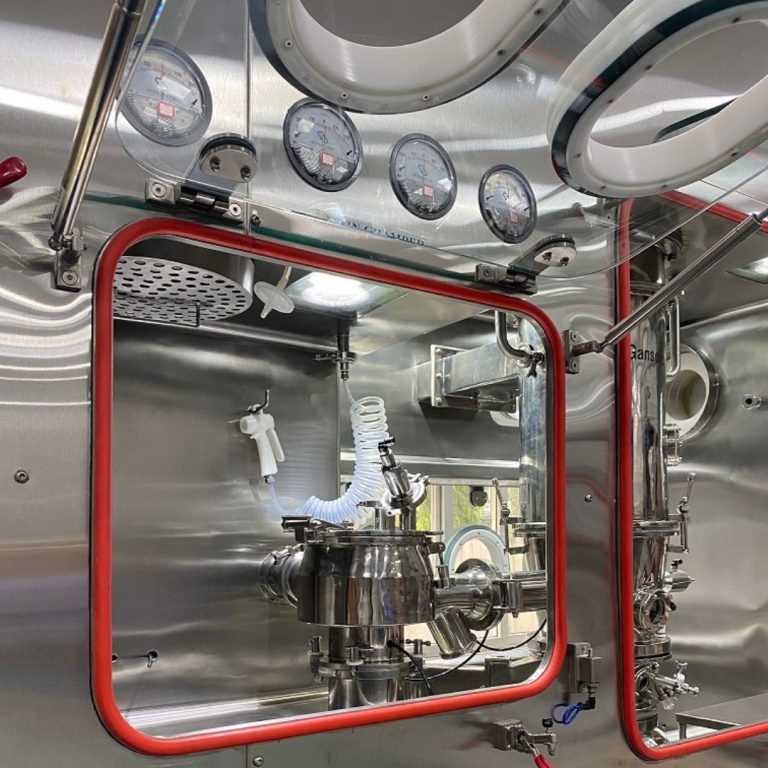
Safety - Engineered In at the Design Stage
Safety at Gansons is treated as a design constraint, not a post-design addition. Our formal risk assessment process, conducted in accordance with Machinery Directive requirements, identifies hazards during the design phase when they can be eliminated or controlled through engineering – not at installation when the options are reduced to guarding and warning labels.
Specific safety engineering capabilities include:
- Contained processing for HPAPIs and sensitising compounds, designed to meet Occupational Exposure Band (OEB) requirements
- ATEX / IECEx compliant configurations for equipment handling flammable solvents or combustible dusts
- Interlocked access systems for rotating or pressure-containing equipment, preventing operation with open guards or covers
- Ergonomic design for cleaning, changeover, and maintenance access — operations responsible for a disproportionate share of industrial injuries — reducing operator risk during non-production phases
- Structural integrity verified through ASME BPVC code calculations and, where specified, independent third-party inspection
Our Global Network of Qualified Partners
Quality does not stop at the factory gate. Gansons’ international network of qualified automation providers, subvendors, and service partners operates to the same standards that govern our manufacturing facilities. With offices in Mumbai and London, and partners in over 40 countries, we are positioned to support installation, commissioning, qualification, and long-term maintenance wherever your facility operates.
Our spare parts programme is designed around one principle: your production does not stop. Critical components are held in-territory where volumes justify it, and our global network of trusted suppliers supports rapid fulfilment when standard stock cannot.
Our Global Network of Qualified Partners
Quality does not stop at the factory gate. Gansons’ international network of qualified automation providers, subvendors, and service partners operates to the same standards that govern our manufacturing facilities. With offices in Mumbai and London, and partners in over 40 countries, we are positioned to support installation, commissioning, qualification, and long-term maintenance wherever your facility operates.
Our spare parts programme is designed around one principle: your production does not stop. Critical components are held in-territory where volumes justify it, and our global network of trusted suppliers supports rapid fulfilment when standard stock cannot.
Specify with Complete Confidence
Gansons equipment is specified by quality-conscious manufacturers because our standards are documented, auditable, and verifiable – not asserted. Whether you are qualifying a new facility, preparing a regulatory submission, or selecting equipment for an HPAPI manufacturing line, our applications engineers and process technologists are ready to engage with your specific regulatory context.